“Du”
All My Puny Sorrows“Du” is a Plautdietsch song whose title means You. When Lottie sings it to Elfrieda Von Riesen in the hospital, the song brings their childhood into the present and gives their bond a form of expression that does not depend on explanation. In a setting marked by strained communication and uncertainty, the familiar melody makes love perceptible as an act of care.
The song in the hospital
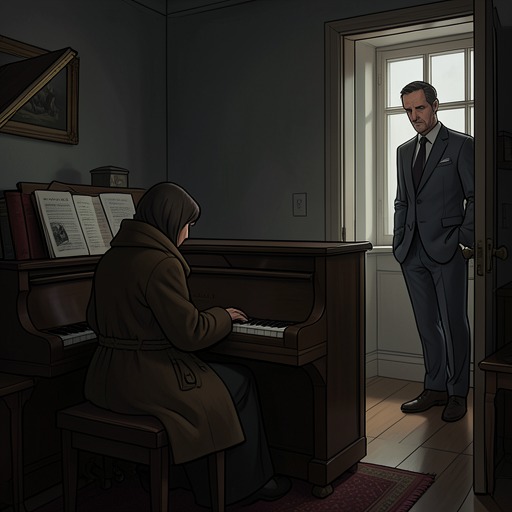
Lottie sings “Du” at Elfrieda’s bedside while holding her hand; Elfrieda holds Lottie’s in return. The scene follows Yolandi Von Riesen’s private worry that Elfrieda may soon be discharged, and precedes the news that she may go home after seeing the doctor. Against that uncertainty, the song is a shared moment rather than an argument about what should happen next.
The song is described as being about loving forever, even when love brings pain. Lottie had sung it to her daughters when they were children, so its return carries the history of family intimacy into Elfrieda’s hospitalization. The remembered song links past and present without erasing the suffering that now surrounds them.
Love beyond explanation
The scene gives feeling a physical, reciprocal form: Lottie sings and reaches for Elfrieda’s hand; Elfrieda holds on to hers. The exchange is quiet and does not require either woman to set out what she feels. In this way, “Du” offers a kind of communication distinct from the ward’s clinical conversations and from the questions Yolandi struggles to ask about treatment and meaning.
That contrast matters because communication in the hospital is not always easy. Elfrieda sometimes does not speak, though Yolandi explains that she is willing to write; her psychiatrist says he will not exchange notes with her. The song does not solve that failure of communication, but it shows a family member meeting Elfrieda through a shared history rather than demanding an immediate verbal response.
A recurring family memory
“Du” is not introduced as a new song or a performance for an audience. Its significance rests on its return: a song from the daughters’ childhood is sung again at a moment of crisis. The description of love as enduring despite pain makes the memory tender without making it simple; the song’s reassurance coexists with the family’s uncertainty about Elfrieda’s future.
The episode leaves the song’s words and melody unstated beyond its title and meaning. Its force instead comes from the circumstances of its return, the joined hands, and the recognition that a familiar expression of love can still reach across silence.